NextGen USMLE Step 1 — MCQ’s + Videos + Notes + Online Classes
Uncategorized
Wishlist Share
Share Course
Page Link
Share On Social Media

About Course

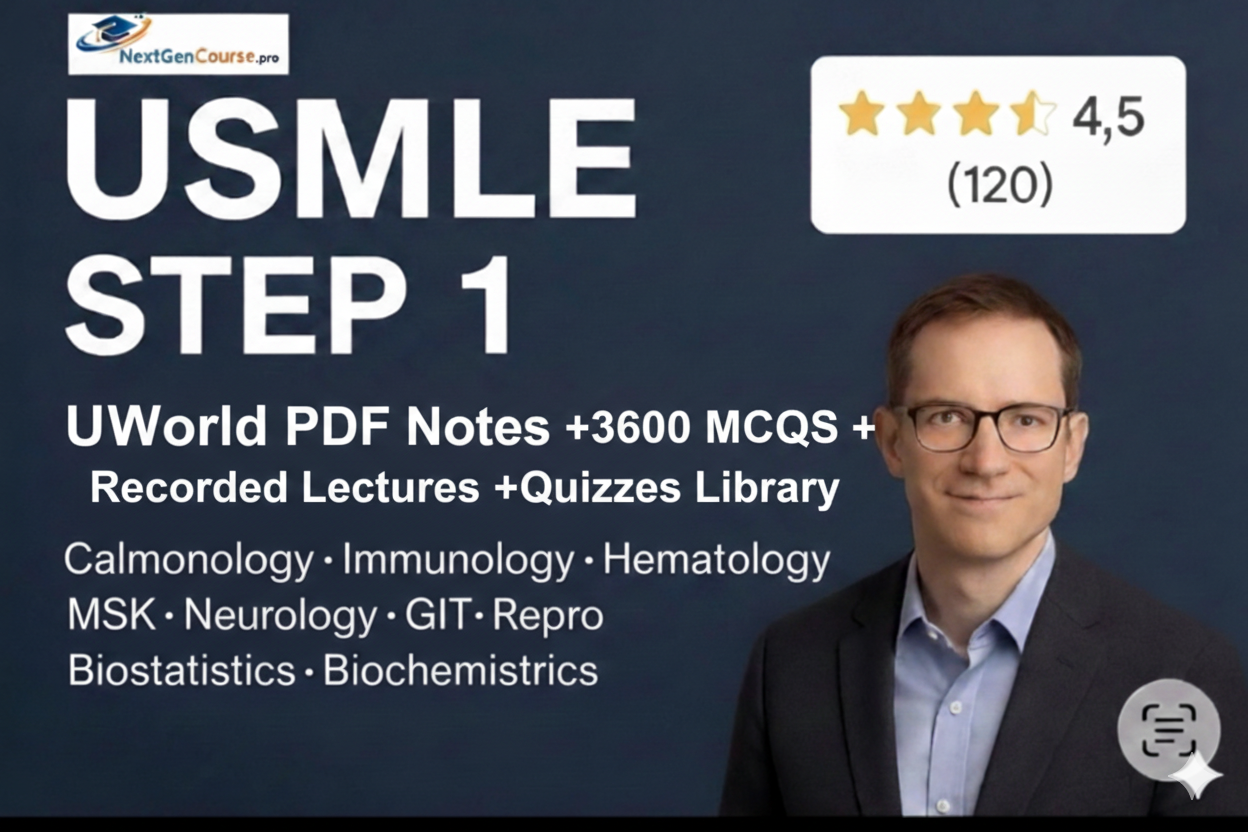
Master every concept tested on the USMLE Step 1 with the NextGen USMLE UWorld Mastery Program a complete, structured video library covering all 3,600+ UWorld MCQs. Each question is explained in depth by U.S.-based residents and physicians, focusing on high-yield reasoning, first principles, and clinical correlations.Through this course, you’ll learn how to approach each question strategically, eliminate confusion, and strengthen your integration of Pathology, Pharmacology, Physiology, and Biochemistry all directly aligned with UWorld, First Aid, and Pathoma.Key Highlights:Full coverage of entire UWorld Step 1 QBank (all systems and subjects) Taught by U.S. medical residents and mentors Integrated explanations with First Aid and Pathoma references Access to recorded, high-yield discussions anytimePerfect for both independent review and guided 120-Day Marathon studentsOutcome: By the end of this program, you will have a complete command over the UWorld question bank — ready to tackle NBMEs and the Step 1 exam with confidence.

Show More

What Will You Learn?

  • Comprehensive, structured video course covering every UWorld Step 1 question
  • In-depth, high-yield explanations taught by U.S.-based residents and physicians
  • Emphasis on clinical reasoning and first-principles understanding
  • Integrated teaching of Pathology, Pharmacology, Physiology, and Biochemistry
  • Directly aligned with UWorld, First Aid, and Pathoma
  • Designed to boost performance on NBMEs
  • Prepares students to confidently excel on the USMLE Step 1 exam

Course Content

USMLE STEP 1 COMPLETE COURSE NOTES

  • COURSE NOTES

Cardiology
Master cardiac physiology — preload/afterload, pressure–volume loops, murmurs. Integrate with ECG interpretation, valvular lesions, and pharmacology (beta-blockers, ACE inhibitors, anti-arrhythmics). Emphasize pathophysiology links with hypertension and heart failure.

Endocrinology
Focus on hormone feedback loops and endocrine pathology (thyroid, adrenal, pituitary). Link pharmacology (insulin, steroids, antithyroid meds) with mechanisms of action. Practice clinical correlations — DKA vs HHS, Cushing vs Addison.

Renal
Understand nephron physiology and acid-base regulation. Review nephritic vs nephrotic syndromes, diuretic mechanisms, and electrolyte imbalances. Tie into hypertension management and chronic kidney disease.

Pulmonology
Cover lung volumes, gas exchange, and oxygen dissociation curve. Distinguish obstructive vs restrictive patterns and related diseases (COPD, asthma, fibrosis). Integrate pharmacology of bronchodilators and corticosteroids.

Immunology
Review innate vs adaptive immunity, hypersensitivity types, and complement pathways. Master cytokines and immune cell markers (CDs). Relate immunodeficiencies and autoimmune disorders to real-world examples.

Hematology
RBC disorders (anemias, hemoglobinopathies) and WBC malignancies (leukemias, lymphomas). Review coagulation cascades, platelet disorders, and transfusion medicine. Integrate with oncology pharmacology (chemotherapy side effects).

Musculoskeletal (MSK)
Muscles, bones, and connective tissue — key for anatomy and pathology. Focus on rheumatologic conditions (RA, SLE, gout) and related pharmacology. Remember fracture healing and bone remodeling pathways.

Neurology
Master neuroanatomy localization and neurotransmitter pathways. Learn CNS pharmacology (antiepileptics, antidepressants, antipsychotics). Review demyelinating diseases, strokes, and neurodegenerative disorders.

Gastrointestinal (GIT)
Digestive physiology, absorption, and hepatobiliary system. Pathology: peptic ulcer, IBD, liver disease, gallstones, pancreatic disorders. Pharmacology: PPIs, H2 blockers, laxatives, antiemetics.

Reproductive
Embryology, hormones of the menstrual cycle, and pregnancy physiology. Pathologies: PCOS, endometriosis, infertility, gynecologic cancers. Include male reproductive pharmacology (androgens, anti-androgens).

Psychiatry
This section presents 200 high-yield USMLE Step 1–style MCQs in Psychiatry covering the full spectrum of core psychiatric principles tested on the exam. The questions emphasize neurotransmitter physiology, psychopharmacology, and diagnostic criteria for major psychiatric disorders, including psychotic disorders, mood disorders, anxiety and trauma-related disorders, personality disorders, and defense mechanisms. Dedicated blocks assess substance use disorders and withdrawal syndromes, sleep disorders, and child and adolescent psychiatry, with a strong focus on clinical vignettes, distinguishing features, timelines, and first-line treatments. The MCQs are designed to reinforce pattern recognition, mechanism-based learning, and high-yield associations essential for success on USMLE Step 1.

Biostatistics
Core formulas: sensitivity, specificity, PPV, NPV, likelihood ratios. Understand bias types, study designs, and interpreting p-values & confidence intervals. Use question practice to strengthen application.

Biochemistry
Pathways: glycolysis, TCA, oxidative phosphorylation, urea cycle. Master enzyme deficiencies and vitamin cofactor roles. Integrate with molecular biology (DNA replication, transcription, translation).

Pathology
A complete system-based review of all pathology concepts covered in UWorld. This section focuses on disease mechanisms, key histopathological findings, and high-yield diagnostic clues tested on the USMLE. Each topic integrates pathophysiology with clinical correlations, helping students master disease patterns and identify the most tested features from UWorld question explanations.

Genetics
Comprehensive review of high-yield medical genetics — covering inheritance patterns, chromosomal disorders, mutations, gene mapping, and molecular techniques frequently tested on Step 1 and Step 2. Includes detailed explanations with clinical correlations and UWorld-based question discussions.

Pharmacology
Systematic and easy-to-grasp coverage of pharmacokinetics, pharmacodynamics, drug mechanisms, side effects, and contraindications. Each class of drug is broken down with UWorld-style reasoning and key mnemonics for rapid recall during exams.

Ethics
The USMLE Step 1 Ethics MCQs cover the principles guiding medical professionalism, patient care, and public health. Key topics include autonomy, beneficence, nonmaleficence, justice, and veracity, as well as informed consent, decision-making capacity, confidentiality, and surrogate decision-making. They also address end-of-life care, DNR orders, palliative care, and the principle of double effect, along with research ethics, including IRB approval, clinical trials, placebos, and protection of vulnerable populations. Public health considerations, such as mandatory reporting, vaccination, quarantine, and allocation of scarce resources, are emphasized, as are professional behavior, conflicts of interest, and legal obligations. Overall, these questions integrate ethical reasoning with clinical scenarios to help students apply principles to patient care, research, and societal responsibilities.

Student Ratings & Reviews

No Review Yet
No Review Yet

You cannot copy content of this page